
Access Doc Eifrig’s Retirement Trader at the Lowest Price Ever – PLUS: A Second Year FREE
Editor’s note: Not many folks have as much life experience as Dr. David “Doc” Eifrig…
Longtime readers know that Doc spent a decade working at some of Wall Street’s biggest banks – including Chase Manhattan and Yamaichi (the “Goldman Sachs of Japan” at the time). Then, he left the world of finance to become a board-eligible eye surgeon. He also has his pilot’s license and makes his own wine.
It’s clear that Doc has a lot of passions. And in today he’ll share all the details about one of his biggest…
It’s an investing strategy that Doc has helped thousands of Stansberry Research subscribers master over the past decade. And as you’ll see, he believes it could be exactly what you need to get to the next level as an investor…
By Dr. David Eifrig, editor, Retirement Trader
In April, I hit a major milestone…
More than 10 years ago, in April 2010, I started Retirement Trader – a trading advisory service that was unlike any other in the financial-publishing industry.
Rather than chase the latest “hot” stocks, we use steady, blue-chip names that allow you to sleep well at night. At the same time, we use the strategies I learned in my decade on Wall Street to earn better returns and consistent income payments (even from stocks that don’t pay dividends).
And now, we’ve hit the 10th anniversary of this service. You don’t make it a decade in this business without making your subscribers happy… and most important, enriching them.
But there’s a catch here…
— RECOMMENDED —
Log Into Marc Chaikin’s $5,000 System Today
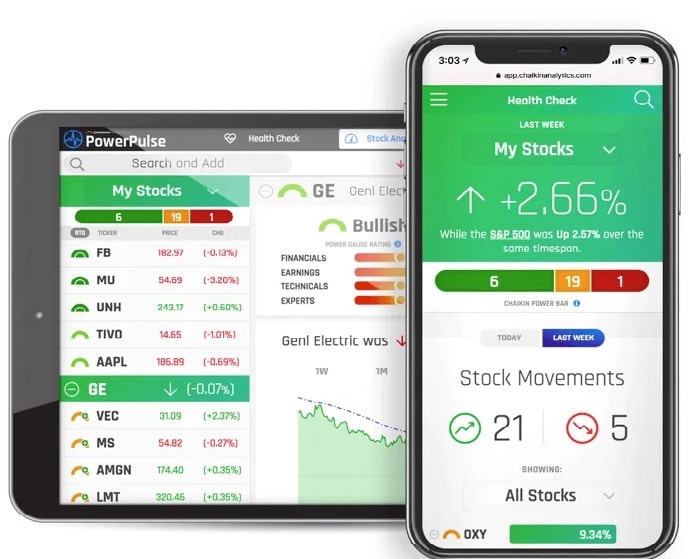
Recently, I met with a Wall Street living legend.
He told me about a system he’s created over the past 50 years…
At first it sounded like B.S. – until I tried it myself.
Last year alone, it pointed to Riot Blockchain before it shot up 10,090% in 11 months…
Digital Turbine, before it shot up 789% in 8 months…
Overstock, before it shot up 1,050% in 4 months…
and more.
His former clients paid $5,000 a month to access its findings.
Today, he’s allowing me to offer you free access to the system here, as part of a major new prediction he’s making.
Again, I’ve been doing this for 10 years. So I know what the vast majority of the readers will do next… They will stop reading after the next sentence.
That’s because this strategy involves options.
But I also know that this publication is the best way to reach an audience of hundreds of thousands of sophisticated, informed investors who stand to gain a lot from adding options to their investing toolbox.
Let’s face it… Many everyday investors hate options.
Your broker, your financial adviser, your dentist, and your spouse will all tell you not to trade options. But that’s just because they misunderstand them. Too many novice investors get introduced to options the wrong way…
Options are often billed as a way to leverage up and speculate. (In Retirement Trader, we do the opposite and use them to get conservative.) They often seem complicated. (We keep it simple.)
Most important, as I mentioned earlier, options can be used to generate a stream of income on steady, blue-chip stocks. (I’ll go over a couple of examples this weekend.)
We call it Retirement Trader, but you don’t have to be retired to take advantage of the opportunities we identify in the service. You just have to want to earn current income today, without a lot of risk. That may not describe you, but I believe it describes most investors.
I love to tell the story about how I became a magician in my 20s. You might have heard me share this before…
I didn’t do tricks at birthday parties or set up shop along the Vegas Strip. Instead, I would stride into the offices of CEOs and CFOs in New York and Boston… and explain how they could achieve investment results they’d never envisioned before.
Did they want to lock in prices for the materials their businesses needed? We could do that.
Did they worry how rising interest rates or falling stock prices could affect their business? We could remove the risk.
Did they want to find ways to get stock market returns without buying any stocks or by putting up less capital? We could deliver just that.
We did it with options. By using these powerful market tools, we could design a trade or a hedge no matter the market outlook. And they paid us crazy amounts of money to do it.
I thought we were playing the short game at the time. Once enough folks discovered how easy options were to use, the jig would certainly be up. Our techniques were too simple to keep secret. Soon, everyone would know about them and start using them.
Today, more than 25 years later… that still hasn’t happened.
People just don’t want to take time to learn how to use options to grow their wealth. Even the biggest corporations in the U.S. still pay millions of dollars to investment firms like Goldman Sachs (GS) and JPMorgan Chase (JPM) to have someone else put these strategies to work.
Learning and education aren’t dirty words (and neither is options)…
Most people don’t want to learn. I get it… Learning puts you face-to-face with something you don’t know and makes you feel frustrated and inadequate.
We did it all the time as kids. But when we get to adulthood, we’ve got some sort of belief that we’re supposed to already know everything. Not knowing something is seen as failure.
I can’t imagine the opportunities – both financial and experiential – that get passed up by those folks who refuse to learn.
We see it in our financial-research business all the time… While we try to educate and explain in every issue, many subscribers just want a stock symbol they can go out and buy.
If you’re in the select group of readers who actively pursue new knowledge… try to understand the markets… and have learned how best to manage your wealth… you deserve a pat on the back.
After all, there’s a key to learning that’s often overlooked… Learning is complementary and compounding. Everything you learn throughout your life allows you to build on top of it…
For example, as kids, we learn basic math. That allows you to learn some economics in high school and college. Put those together and you’re learning accounting. After that, you can start reading annual reports and learning about how businesses are succeeding and failing. And then, with enough experience doing that, you learn how to succeed as an investor.
Each new thing you learn along the way allows you to learn the next one. And each step you take gives you more valuable knowledge than the previous one.
That’s why you owe it to yourself to learn how options work. Think of all the time you’ve spent learning how to build your wealth…
Everything you learned to achieve what you have in your career… all the thought that has gone into spending wisely and saving as much as you can… and all the time you’ve spent learning how the world of finance works.
As a Stansberry Research reader, I know you’ve taken this part of your life seriously. I know you’ve put in the time to make your wealth work for you… and to let it do so as safely as possible.
With all you’ve done up to this point, you need to take a few minutes to learn how our options strategy works. The results speak for themselves…
It’s hard to believe I’ve made it this far in this essay – about 1,000 words – without mentioning that Retirement Trader has booked a gain on 93% of its recommended positions throughout its history.
Over the past 10 years, we’ve recommended 528 different closed trades… and earned a profit on 490 of them. And over a three-year stretch in the beginning, we closed 136 consecutive winning positions.
You cannot post that sort of win rate using stocks alone. If you hit a 70% win rate in stocks, you’re a legend. Options can push your win rate higher. But that’s not what is most important…
These positions can also create a steady stream of income. We collect money up front from selling options. It’s ours to keep. And since our recommended trades last about two months, we can do that again and again.
In a single year, we can use the same capital to earn an income payment six times over.
— RECOMMENDED —
 The Biggest Commodity Bull Market in History?
“Commodities will be THE trade of the coming decade,” says the senior analyst behind 24 triple-digit winning recommendations. And it’s not just because they’re among the best ways to BEAT out-of-control inflation… but because they’re at the beginning stages of a massive cycle – one that could hand you quadruple-digit gains if you get in now.
He details his No. 1 favorite commodity play, right here.
Now, I’ll admit… This strategy may not be for everyone.
But you shouldn’t say it’s not for you until you give it a fair shake. The financial returns you could realize from just an hour or two of exploration could be immense.
And look, after my decades in the investing game, I know the stock market is tough. You can get everything right… and still be wrong.
You can investigate every aspect of a business, study its financial accounts, interview customers, speak with management, model its valuation, and know every single detail about a business… And yet, when you buy the stock, it goes down.
Or maybe more likely, its share price just floats around… never gaining any real traction.
That’s what happens with most stocks…
Over a few months or a year, luck matters more than anything when investing in stocks. Even if you’re right, it can take much longer than you expect for a stock to head higher.
That’s the game most investors play. You need to find stocks that go up. And that’s hard. But in Retirement Trader, we don’t play that game. We’ve found a better one.
You see, rather than ramping up risk, we use options to get more conservative with our investments…
We use options to generate income from stocks by selling an option and collecting money up front at the start of our trade.
That means we don’t need to pick stocks that go up to make money. We can make profits on stocks that rise, stay flat, or even those that fall a little bit.
In short, our entire investment strategy changes from searching for stocks that will go up… to searching for stocks that won’t go down. That sounds like a simple semantic change, but it’s much more than that…
This new view on investing really changes the game. At face value, the strategy makes sense…
If you have more ways to win, your chances of success rise. You can still go searching for stocks that will rise… like you always do. And if they stay flat, you still get to profit.
But if you think a little deeper, you’ll see the true opportunity… This isn’t just a safety net that helps you out when stocks don’t rise. It opens up an entire world of new stocks…
Everyone is out there chasing the same hustle. They want growth. They want booming industries. They want earnings per share to shoot up. They want a frenzy of investors who will follow them into a stock and push the price up. That’s what everyone looks for.
Everyone is competing at the same game. And of course, the more competition… the more difficult the game gets.
— RECOMMENDED —
 Is This THE END of the Technology Bull Market?
Stocks are bouncing back after a rough week in the markets. But with inflation at 40-year highs and geopolitical shock escalating, chief technology analyst Matt McCall weighs in and shares his No. 1 recommendation for your money today.
But let’s say I suggested you invest in Oracle (ORCL). It’s an “old style” tech company. And sure, it has some good things going for it…
It has a lot of free cash flow. It pays a dividend. And plenty of customers keep using its products to run their businesses.
But there’s no way you would consider Oracle to have the same growth prospects as Alphabet (GOOGL), Facebook (FB), or some smaller, younger tech companies.
If you buy the stock of a mature, profitable company like Oracle today, you could expect to earn about 7% per year over the long term (but with a lot of month-to-month noise). And you wouldn’t expect the stock to soar since its high-growth days appear to be behind it.
When presented with such an opportunity, most investors simply pass. Sure, it’s a safe stock that you can likely hold for the long term… but so is cash.
With options, we can look at Oracle differently. We figure it’s a sturdy business… And its shares are cheap today. It trades for 17 times earnings and 15 times free cash flow.
Even though Oracle’s stock could rise, it likely won’t rocket higher from here. And more important, we don’t think it will fall too far from its current price of about $56 per share.
Now, we can take our options strategy and use this “stock that won’t go down” to earn better profits. We’ve taken a forgotten, useless stock and turned it into an exciting opportunity. In my Retirement Trader advisory, we did just that last fall…
We sold an option on Oracle and collected $1.32 per share instantly (when the stock traded at $53.81 per share). And since each option deals with 100 shares, that means we pocketed $132. Our trade only took two months to play out. That means we could use the capital six times over the course of a year and earn about 15% on that capital at risk.
A stock that goes nowhere for everyone else can earn us about 15%.
We can do this over and over with boring, forgotten, safe stocks…
If you’ve never seen opportunity in stocks like Walmart (WMT), JPMorgan Chase (JPM), Coca-Cola (KO), MetLife (MET), Walgreens Boots Alliance (WBA), CVS Health (CVS), and other stalwarts… it’s just because you haven’t looked at them the right way.
Here’s one last way to think about it today…
Would you buy a rental property without tenants?
Imagine that there’s no stock market and the only investment opportunity available to you is real estate. You already own a house, so you buy another property just for speculation.
One way to make money in real estate is to buy a home in an improving area, wait a few years as the conditions in the area keep getting better, and sell it for capital gains. Your total profits would simply be the difference between your buy and sell prices.
However, you can also earn income from rent along the way…
You would have to be crazy not to rent out the property in the meantime. It’s a productive asset. Get some tenants in there and collect money while you wait for the capital gains. Adding income to the equation completely changes the return on your investment.
But so many stock investors ignore the rent!
They buy a stock, cross their fingers, and hope its price will rise so they can then sell their shares to a “greater fool” who will pay them more at some point in the future.
However, in the meantime, an investor can earn as much as thousands of dollars using options. That’s the simple transaction I want you to take a few moments to understand.
I realize I haven’t gotten much into the specifics of Retirement Trader’s strategy yet…
Instead, we’ve been a little philosophical about things.
I’ve done that intentionally. That’s because most investors’ objections to options don’t come from the details of a particular trading method or an informed analysis. Rather, it’s their emotional response to a bad experience or “something somebody told me once.”
I think you need to get over those preconceived fears.
As I said earlier, we use options to be more conservative than a typical stock investor and earn steady streams of income. But it’s not a hard concept. Anybody can do it…
In the past, I’ve taught family members, coworkers, and thousands of readers just like you exactly how to make these trades. Last winter, I even traveled to upstate New York to teach a retired police chief with almost no financial experience how to complete an options trade.
So please don’t tell me it’s not for you… Give options a chance before you dismiss them.
1 thought on “Dr. David Eifrig Retirement Trader: Sign Up To This Unique Trading Advisory Service”